
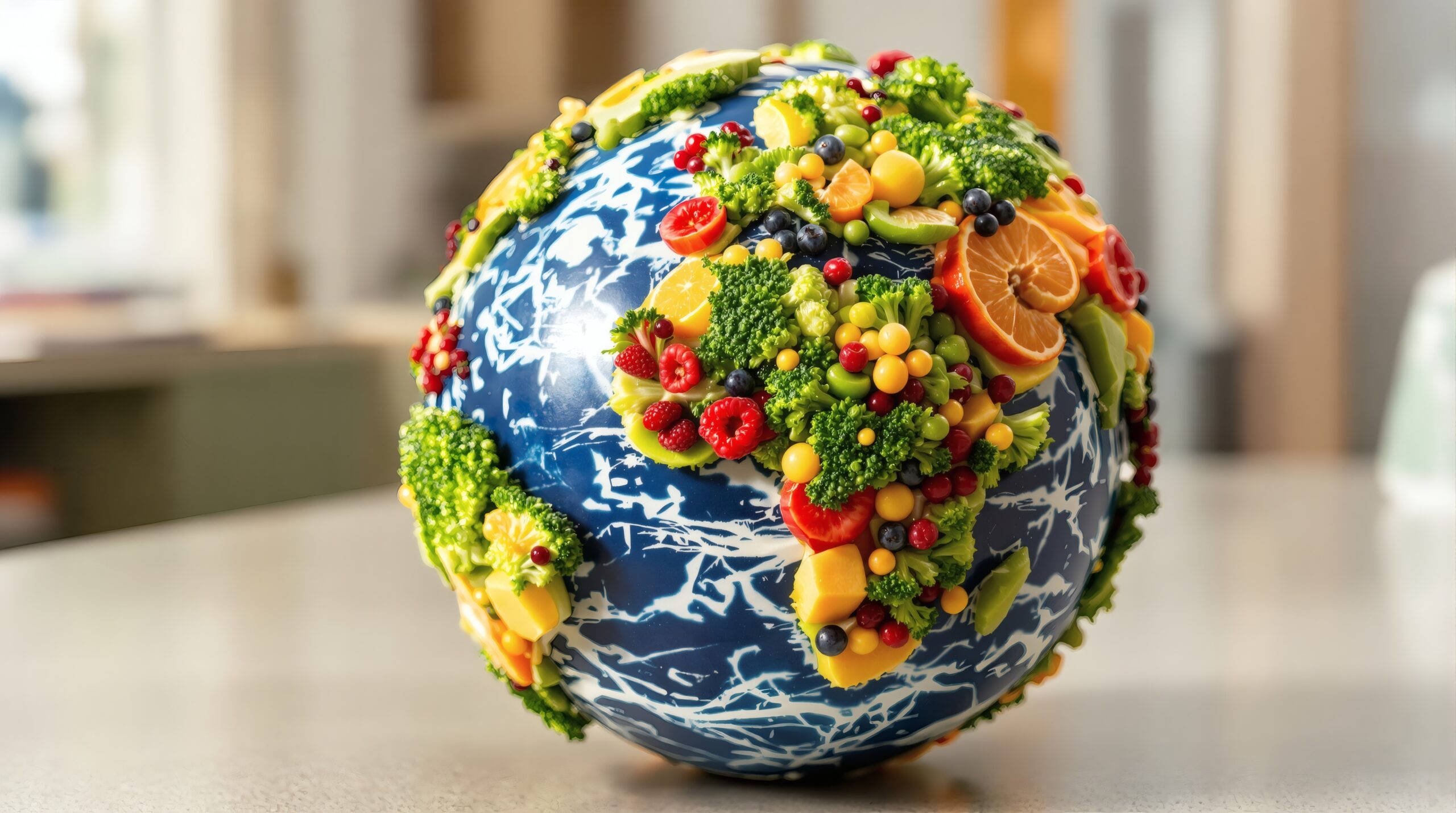
An artistic model of the world globe with continents formed from a variety of colorful fruits and vegetables, symbolizing global food, nutrition, and a healthy planet.
Regional Demand Is Reshaping the Future of Frozen Foods
The frozen food market is growing globally, but the reasons behind that growth vary significantly from one region to another. Understanding these regional dynamics is becoming increasingly important for manufacturers, retailers and sourcing partners looking to anticipate demand and build resilient supply chains.
According to Global Market Insights, the global frozen food market is expected to grow from USD 309.8 billion in 2025 to USD 500.8 billion by 2034, with North America remaining the largest market while Europe emerges as the fastest-growing region.
In North America, mature cold chain infrastructure, an established retail network and widespread consumer acceptance continue to support market leadership. Demand is being driven by busy households looking for convenient meal solutions, but health-conscious purchasing is also influencing category growth. Organic products, plant-based options and frozen fruits and vegetables continue to gain traction alongside traditional frozen meals. Canada is following a similar trajectory, with growing investment in sustainable packaging, food safety and product innovation helping strengthen the category.
Europe is experiencing some of the fastest expansion, driven by consumers who increasingly expect frozen products to deliver both quality and sustainability. Manufacturers across markets such as Germany, France and the UK are investing in recyclable packaging, energy-efficient cold chains and clean-label formulations. At the same time, demand is shifting toward premium and specialized products, including organic, vegan and gluten-free offerings that reflect increasingly personalized purchasing habits.
In the Asia-Pacific region, growth is being fueled by rapid urbanization, rising disposable incomes and changing lifestyles. As more consumers enter the middle class, frozen foods are becoming a practical solution for balancing affordability, convenience and nutrition. Governments are also investing in cold chain infrastructure and food safety, creating opportunities for manufacturers to introduce products tailored to local tastes while expanding access through modern retail and e-commerce channels.
The Middle East and Africa are seeing continued momentum as retail infrastructure and cold chain investments improve. Countries such as the UAE and Saudi Arabia are expanding food manufacturing capacity while prioritizing food security and sustainability initiatives. These investments are making frozen fruits, vegetables and prepared meals more accessible as consumers increasingly seek convenient, high-quality food options.
Across Latin America, urbanization and changing consumer habits are supporting steady market development. Brazil, in particular, is benefiting from expanding retail networks, improved food safety initiatives and greater adoption of sustainable packaging. As infrastructure continues to improve, frozen foods are becoming more widely available across both urban and semi-urban markets.
While each region has its own growth drivers, several themes are emerging consistently across global markets. Consumers continue to prioritize convenience, but they are increasingly pairing it with expectations around nutrition, sustainability and product quality. Investment in cold chain infrastructure, advances in freezing technology and the rapid growth of online grocery channels are accelerating these trends and creating new opportunities across the supply chain.
For businesses operating in the frozen food industry, regional trends offer valuable insight into where demand is headed next. Understanding how consumer preferences differ across markets helps strengthen sourcing strategies, support long-term planning and identify opportunities as the global frozen food category continues to evolve.
Source: Frozen Foods Market Size & Share 2025 – 2034, Global Market Insights