
What Global Warming Means for the World’s Crops
Global warming is often discussed in degrees. For the food industry, its consequences are increasingly measured in growing conditions.
Higher temperatures can alter planting and harvest windows, increase heat stress, change water availability and affect where certain crops can be grown reliably. For a global food system built around established growing regions and relatively predictable seasons, even incremental changes can have consequences across the supply chain.
According to the United Nations Environment Programme (UNEP), food loss and waste are responsible for as much as 10% of global greenhouse gas emissions. More than one billion meals are wasted every day, with households responsible for approximately 60% of that total.
Methane is an important part of the equation. When food decomposes in landfills without sufficient oxygen, it produces methane, a greenhouse gas that traps approximately 86 times more heat than carbon dioxide over a 20-year period. Methane has already contributed to nearly one-third of global warming.
But as warming continues, agriculture itself faces greater pressure.
A less predictable growing environment
Crops develop within specific temperature ranges. When those ranges shift, the effects can appear throughout the growing cycle.
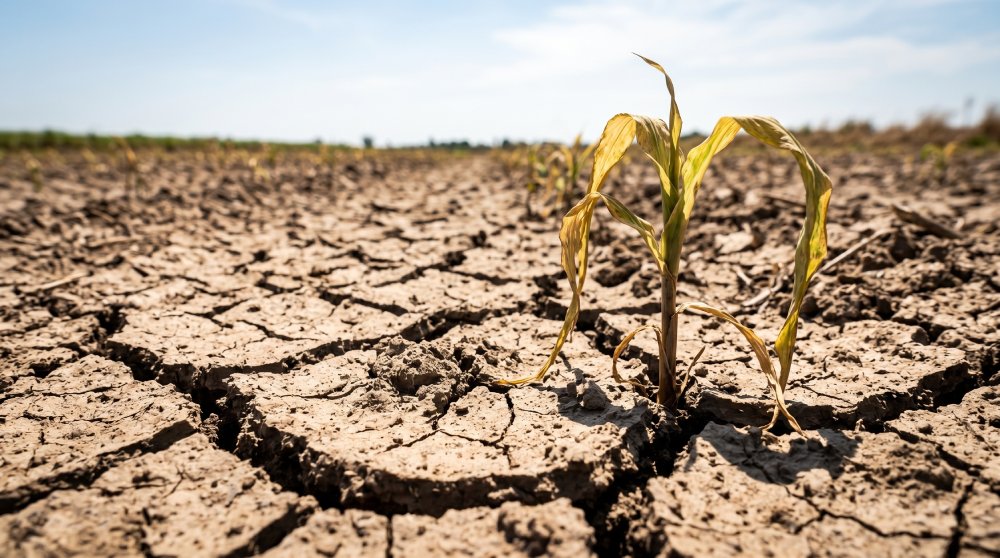
Periods of extreme heat can place additional stress on crops during sensitive stages of development. Changes in rainfall can leave one region facing drought while another experiences excessive moisture. Warmer conditions can also influence pest and disease pressures, while changes in seasonal temperatures can affect the timing and geography of production.
The challenge is not simply whether the world can continue producing food. It is whether individual crops can continue to be produced in the same places, at the same times and with the same degree of consistency.
That distinction matters for a global supply chain.
Crop risk becomes supply chain risk
A difficult growing season does not remain in the field. Changes in crop availability can affect sourcing decisions, processing schedules, transportation, inventory planning and pricing further downstream.
For buyers operating internationally, resilience increasingly depends on understanding conditions across multiple origins rather than assuming historical production patterns will remain constant.
Diversified sourcing can help reduce exposure to a poor season in a single region. Stronger forecasting can give buyers more time to respond to changing availability. Cold chain management and appropriate processing can also help preserve more of what is successfully harvested.
Reducing food loss becomes especially important in this environment. Food that has already required land, water, energy, labour, transportation and refrigeration represents resources that cannot be recovered when the product is wasted.
More than 60 countries have now pledged to reduce waste-sector methane emissions by 30% to 35% below 2020 levels by 2030. The international Food Waste Breakthrough is also targeting a 50% reduction in food waste by 2030.
These initiatives are focused on emissions, but they point to a broader reality for the food industry.
As growing conditions become less predictable, efficiency and resilience become increasingly connected. The question is no longer only how much food can be produced. It is how effectively the global supply chain can protect, move and use what is grown.
Source: United Nations Environment Programme (UNEP), including the Food Waste Index Report 2024 and UNEP reporting on methane and food waste.